Making Alert Creation Flow Self Serviceable
Project
Multi Sprint Feature
Duration
4 Months
Teams
Product · Engineering · SRE · Customer Success
NDA
This is a confidential project. Detailed product screens, customer information and implementation specifics are not shown publicly.

Turning a complex, support-dependent alerting workflow into a more scalable self-service experience for enterprise DBAs.

At Tessell, enterprise DBAs rely on alerting to stay ahead of database issues, but configuring and managing alerts had become increasingly complex and dependent on internal support.I led the redesign of the alert policy experience, focusing on simplifying configuration, improving discoverability and creating a foundation that could scale with Tessell’s growing observability capabilities.
The Core Problem
Feature Scalability Issue
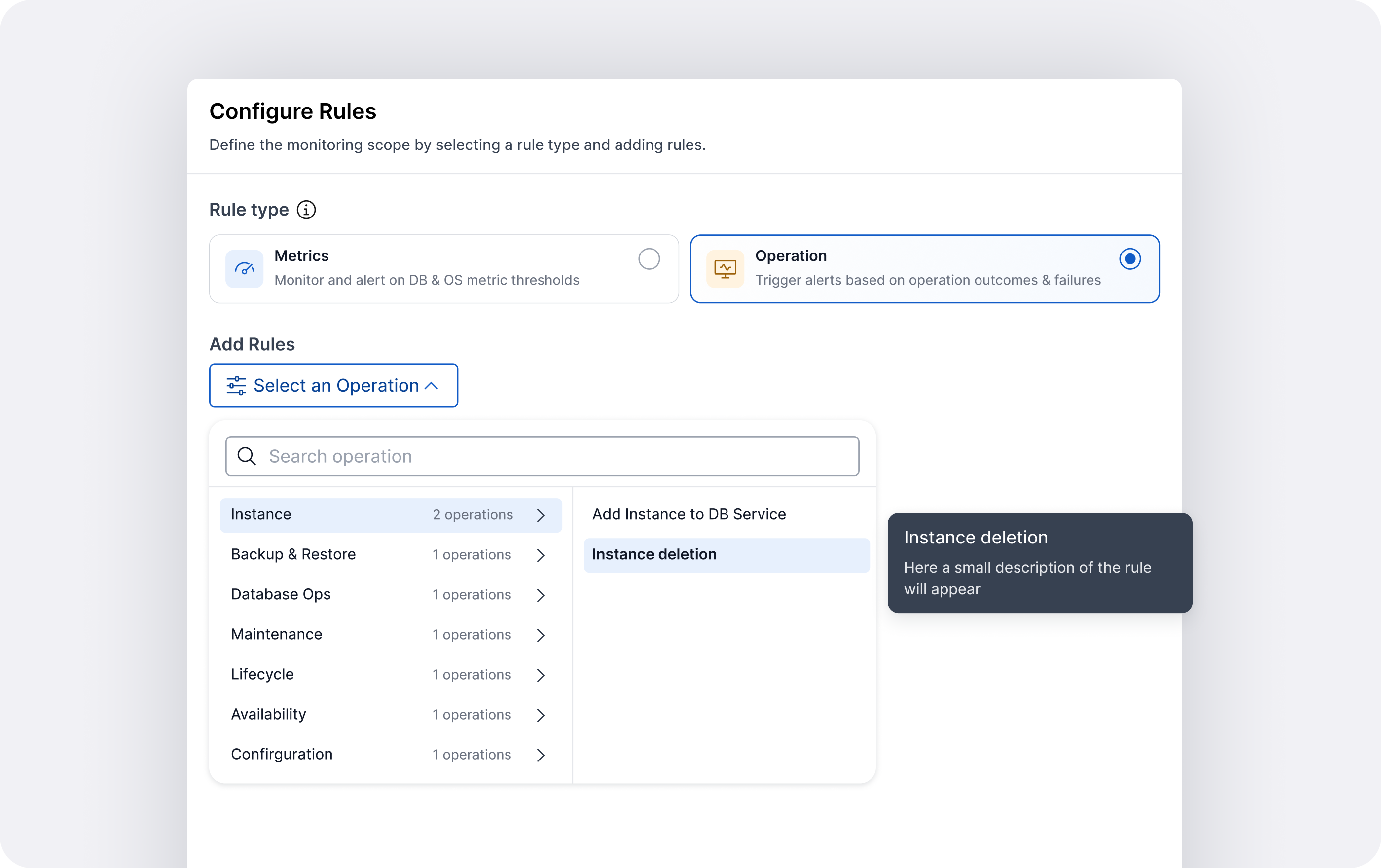
Operation-based alerts, backup failures and other critical events were not supported, while the existing rule component was difficult to scale.
Complex Policy Creation
The flow offered little guidance, with important dependencies surfaced late and users often requiring support to configure their first policy.
Poor Alert Communication
Alerts did not clearly communicate severity, making it difficult to distinguish between critical and informational notifications.
A Glimpse Into Redesign
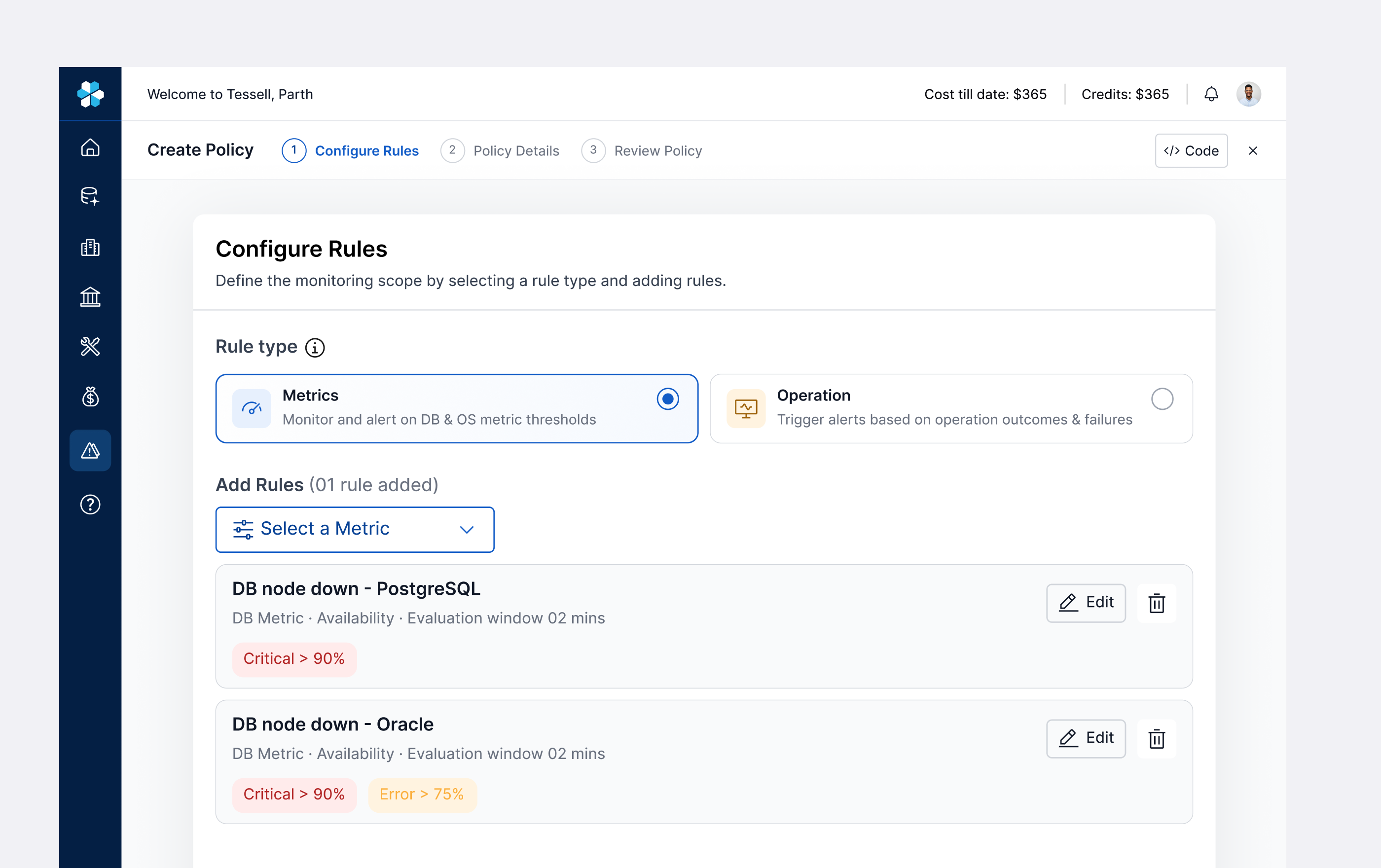
Reframing the workflow
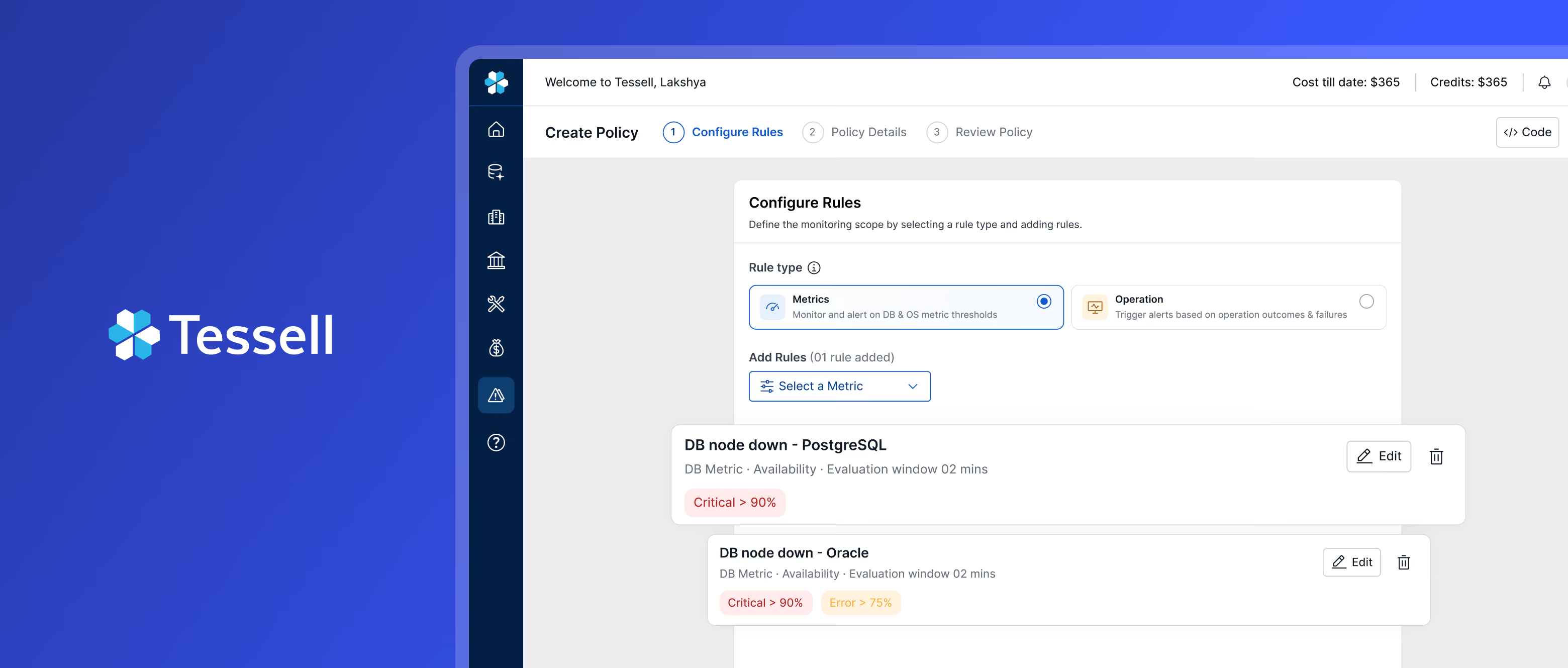
Replaced an overloaded modal with a guided stepper, reducing cognitive load and making the configuration flow easier to navigate.
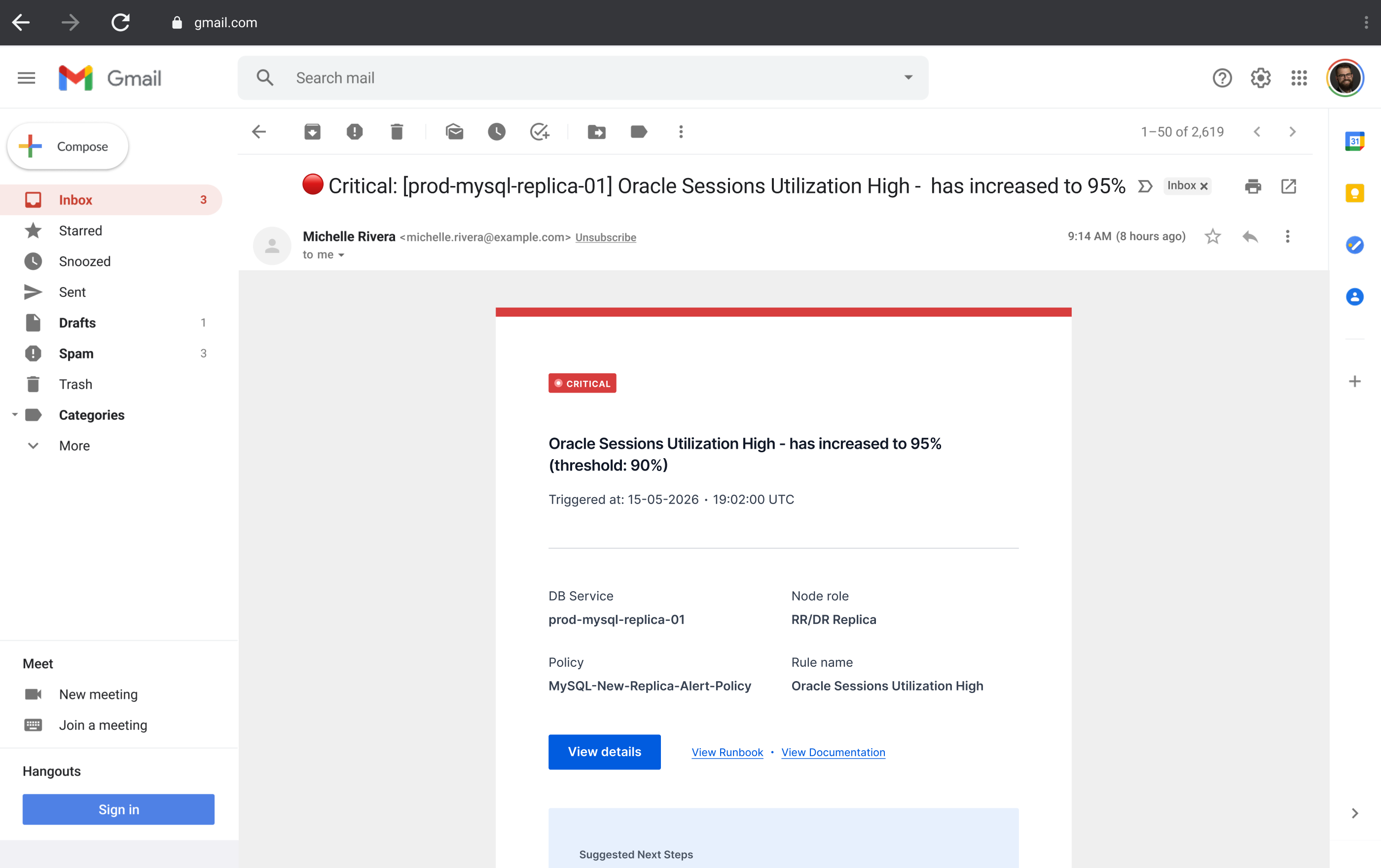
Made alerting discoverable
Redesigned alert notifications across email, Slack and webhooks to make severity and impact easier to understand at a glance.
Designed around real-world constraints
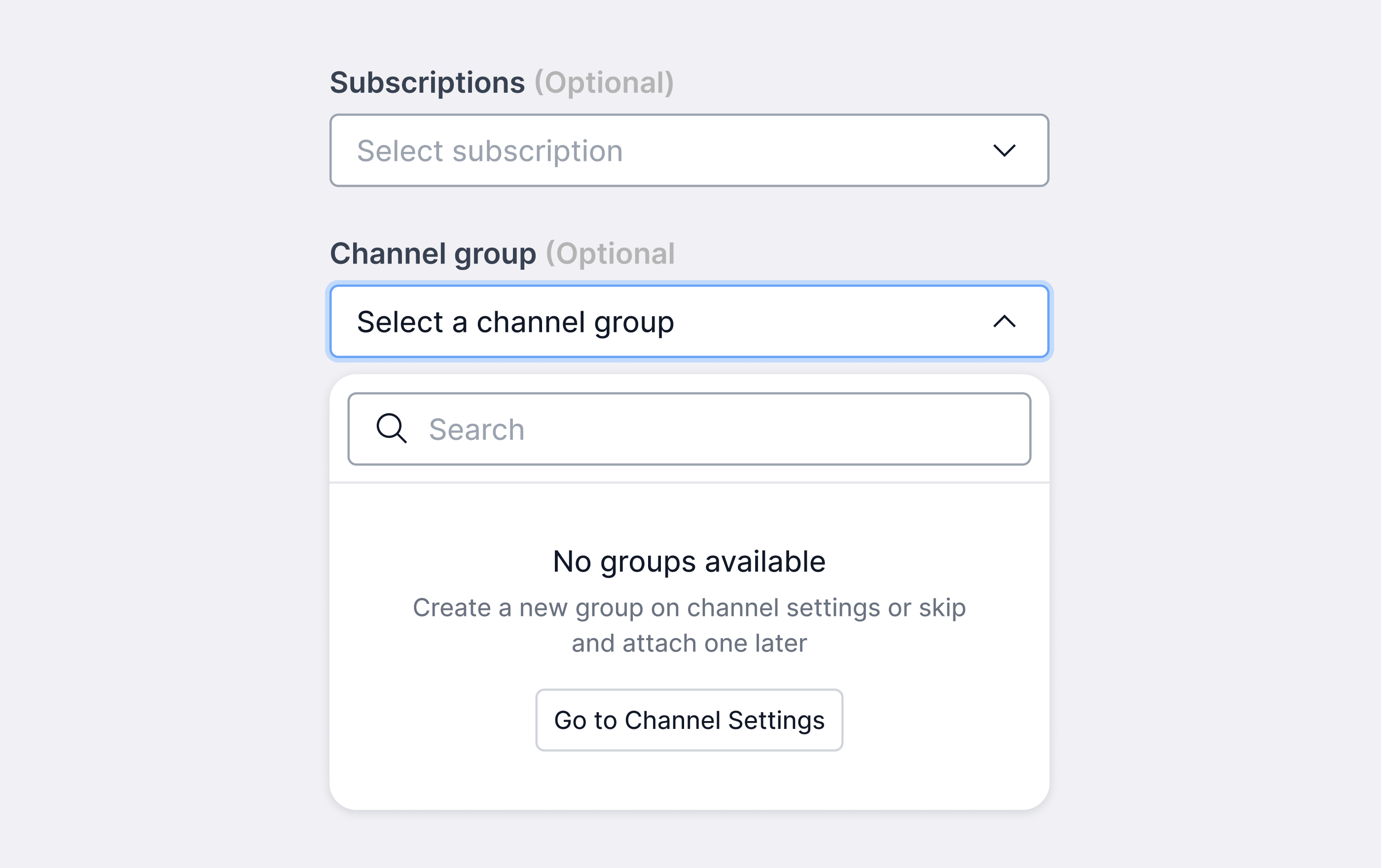
Made prerequisites optional during creation, allowing users to continue configuring policies while clearly communicating what was still required.
Improve the scalability of observability app
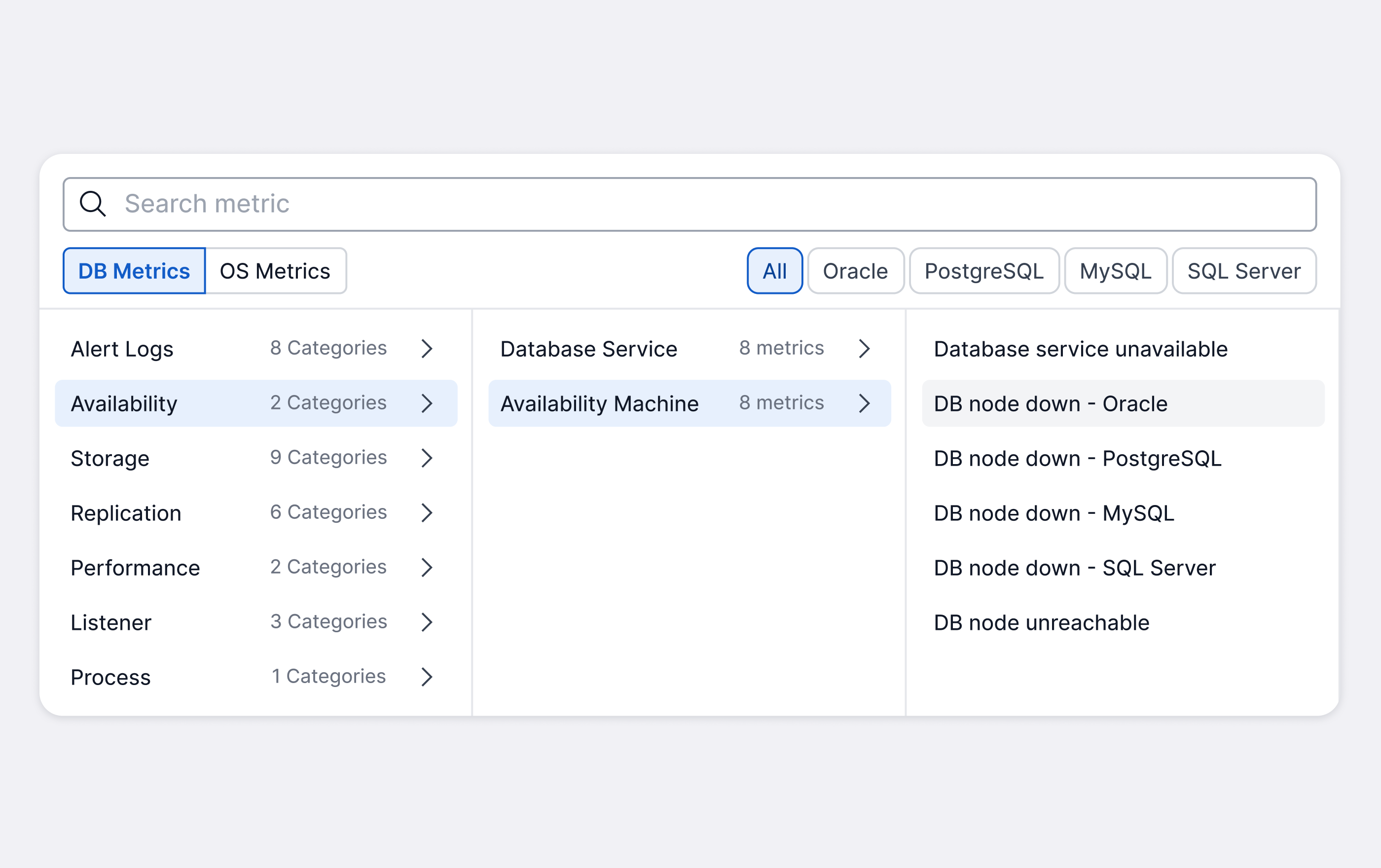
Redesigned the metric catalog to support a growing set of database & operational metrics without increasing configuration complexity.
Outcomes
Post-launch impact was measured across 12 customer tenants, comparing four weeks of pre-launch and post-launch QBR data.
Alerting Support Tickets
10 > 2
Tickets
Reduced alerting-related support tickets raised by target customer, lowering SRE escalations and eliminating reported bugs post-launch.
Active Alert Policies per Tenant
2 > 5
Active Policies
Shifted alerting toward self-service, reducing support dependency and increasing alert policy adoption across 12 customer tenants.
More Projects